All Categories
Featured
Table of Contents
How Does LendingTree Make Money? LendingTree is compensated by companies whose listings appear on this site. This compensation may impact how and where listings appear (such as the order or which listings are featured). This website does not consist of all companies or items readily available. We are dedicated to offering accurate content that assists you make informed money choices.
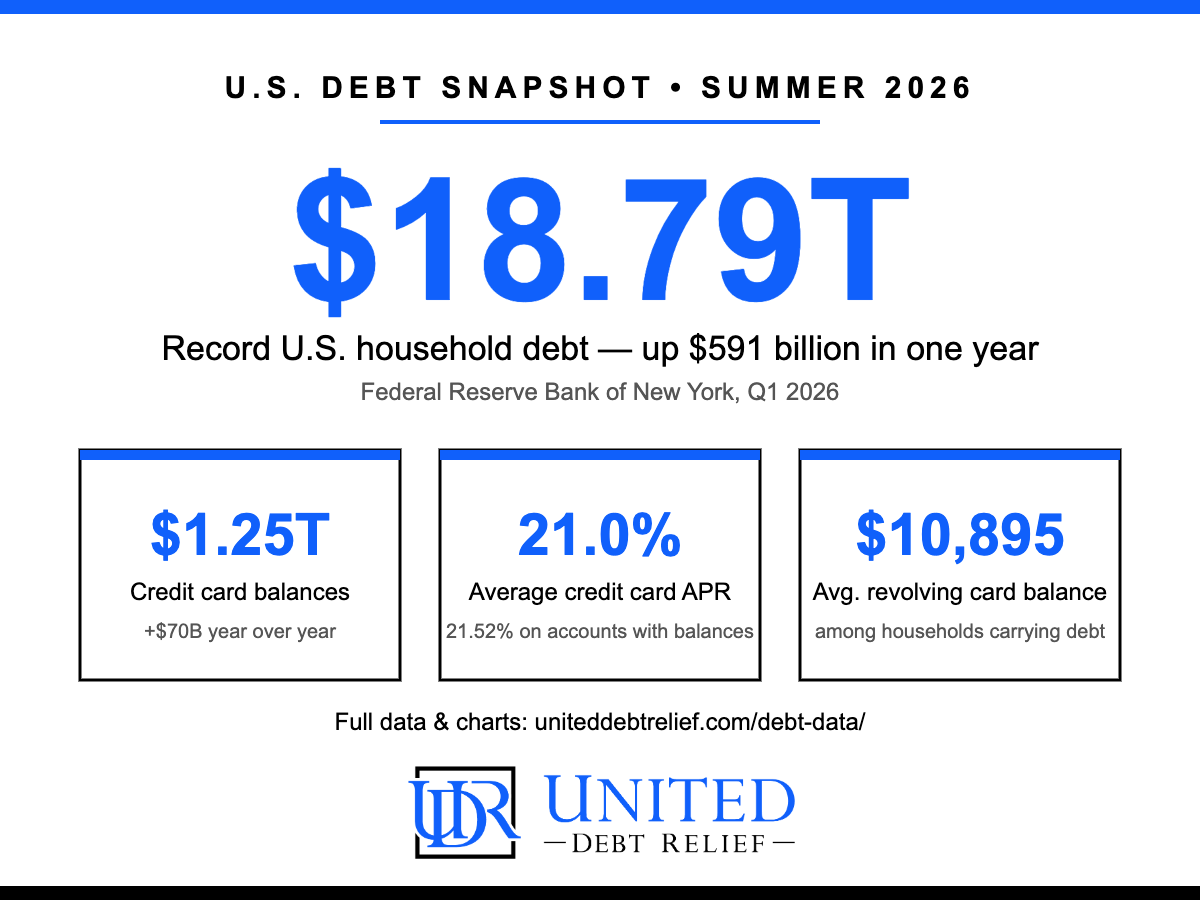
Americans have a record quantity of credit card financial obligation $1.252 trillion, to be exact. This credit card debt stats page tracks Americans' credit card utilize each month.
While credit card financial obligation tends to rise year over year, it generally falls from Q4 of one year to Q1 of the next. Even with this quarter's reduction, credit card balances have actually risen by $482 billion given that Q1 2021, when credit card debt bottomed out at $770 billion during the pandemic.
Americans' charge card financial obligation is $325 billion greater than the pre-pandemic record set in Q4 2019, when balances stood at $927 billion. (That's a 35% boost.) Charge card balances have historically rebounded after first-quarter declines, though future borrowing trends will depend upon elements consisting of interest rates, inflation and wider economic conditions.
Essential Debt Consolidation Analysis for the New Year
Charge card debt increased gradually up until the monetary crisis, then declined from $866 billion in Q4 2008 to $660 billion in Q1 2013 before resuming its upward trajectory. When the pandemic took hold in 2020, credit card balances plunged again from $927 billion in Q4 2019 to $770 billion in Q1 2021.
Credit cardholders in Connecticut have the highest average credit card financial obligation of any state, according to LendingTree information, while those in Mississippi have the least expensive. Source: LendingTree analysis of the anonymized credit reports of more than 400,000 LendingTree users in the 3rd quarter of 2025 and more than 410,000 in Q3 2024.
Joint accounts were divided in half to reflect shared responsibility between the account holders. LendingTree analysts evaluated anonymized credit report information from Q3 2025 for more than 400,000 LendingTree users to determine these averages and produce a list of states with the most financial obligation. The analysis was likewise compared with Q3 2024 information from more than 410,000 reports.
Mastering Debt Management Strategies in 2026Eleven states had average balances of at least $9,000. Washington has the fastest-growing card financial obligation in the duration examined.
Evaluating the Top 2026 Debt Relief Plans
3 other states saw double-digit boosts, consisting of South Dakota (up 11.7%), Nebraska (up 11.3%) and Wisconsin (up 10.2%). New Mexico saw the largest year-over-year decrease in financial obligation, with its citizens' financial obligation falling 10.3% from $6,543 to $5,871. In all, seven states saw charge card balances reduce in the previous year.
Less than half of adult credit cardholders (45%) carried a balance on a charge card for at least one month in the previous year, according to a May 2026 Federal Reserve study utilizing 2025 information. Paying a credit card balance completely monthly is the most reliable way to avoid interest charges and keep financial obligation from accumulating.
Effective Debt Management for Over-Leveraged FamiliesFor cards accumulating interest, the average in Q2 2026 was 22.15%. For new credit card offers, the average is 23.79%.
Consumers opening a brand-new credit card account may face higher rates than the averages for existing accounts. The newest LendingTree information on credit card APRs shows that the typical APR with a brand-new credit card offer is 23.79%, with the average card offering an APR variety of 20.18% to 27.41%.
The 23.79% average was unchanged for the 2nd straight month and third in 4. It's the very first time given that LendingTree began tracking card rates monthly that they went the same in back-to-back months. That stability is likely the outcome of the Fed leaving rates unchanged throughout 2026. When the Fed raises or reduces rates, a lot of charge card APRs in the U.S.Anytime the Fed acts next, any motion is most likely to be small, implying charge card APRs would likely remain raised by historical standards. And as the chart listed below shows, APRs can vary substantially by card type. Source: LendingTree evaluation of publicly readily available terms and conditions for about 220 U.S.Obviously, your best move is to make those interest rates a moot point by paying your card financial obligation in complete, but that's frequently much easier said than done. Simply 2.92% of Americans' outstanding charge card balances were at least 1 month overdue in the first quarter of 2026. According to the newest delinquency information from the Fed, the 30-day delinquency rate the share of impressive charge card balances that were at least thirty days past due dipped to 2.92% in the first quarter of 2026, the seventh straight quarterly reduction.

Latest Posts
Vital Tips to Reduce High-Interest Debt Quickly
How to Navigate Economic Hardship in 2026
How to Get 2026 Financial Hardship Assistance